
How to Search Civil Dockets
Civil records for Furnas County run through Nebraska's unified JUSTICE system. A case number is the best starting point. Searching by name works better when you add the party role, Furnas County, the filing year, the court, and the civil subtype. The public calendar helps with an upcoming hearing. JUSTICE is the tool for the case record and Register of Actions. Read the caption with care. A party search can surface people in different roles.
Remote one-time JUSTICE access costs $17 for up to 30 cases over a three-day view. Subscriber detail runs $2 per record. The courthouse terminal is free. A Nebraska State Library or participating law-school terminal may work remotely when offered. For a particular paper, contact the court holding the case. Give the clerk the case number and document name.
- Choose Furnas County Court or Furnas District Court based on the case type and amount.
- Search by case number, or use name, role, county, year, and civil type together.
- Open the matching record and review the Register, status, party list, and settings.
- Check the judgment and satisfaction entries separately when the result concerns a money judgment.
- Ask the responsible clerk for the named document, using the case number on the request.
Furnas Civil JUSTICE Search
This statewide service is the remote layer for a Furnas County civil docket. It can show case detail, Register entries, party information, payments, and nonconfidential image links where images exist. An index result can appear even when the document itself is restricted. It may be not imaged, or held for a clerk request. Remember that JUSTICE is a search path. It is not an online filing or copy-request portal for every public document.
The Nebraska Judicial Branch case-information service explains the statewide system, terminal access, one-time searching, and subscriber access. Before ordering a copy, check the result against the court, caption, role, date, and case type.
What a Civil Docket Shows
Think of the civil Register of Actions as a timeline. Its entries can cover a complaint or petition, service, an answer, motions, scheduling, mediation or settlement filings, orders, judgment, costs, execution, garnishment, satisfaction, and closure. A one-line entry never carries the full detail of the pleading or order behind it. When wording or scope matters, read the document itself.
| Case number | The best identifier for a Furnas civil search, clerk inquiry, and copy request. |
|---|---|
| Caption and parties | Shows party names and roles such as plaintiff, defendant, petitioner, or respondent. |
| Filing and service | Records case entry and process activity, not a judgment by themselves. |
| Register entries | Tracks motions, settings, orders, financial activity, and closure. |
| Judgment and satisfaction | Related but distinct entries that should be checked independently. |
Furnas Civil Record Layers
District Court keeps more than one layer of records. The Register is the event spine. The case file holds the pleadings, motions, orders, judgments, verdicts, notices, and returns. The general index works off party names and case numbers. The judgment index lists debtor, creditor, case number, and satisfaction. That split helps when a Furnas search targets a judgment rather than the whole civil file.
The District Court records-maintenance rule spells out the Register, the indexes, the financial record, and the case file.
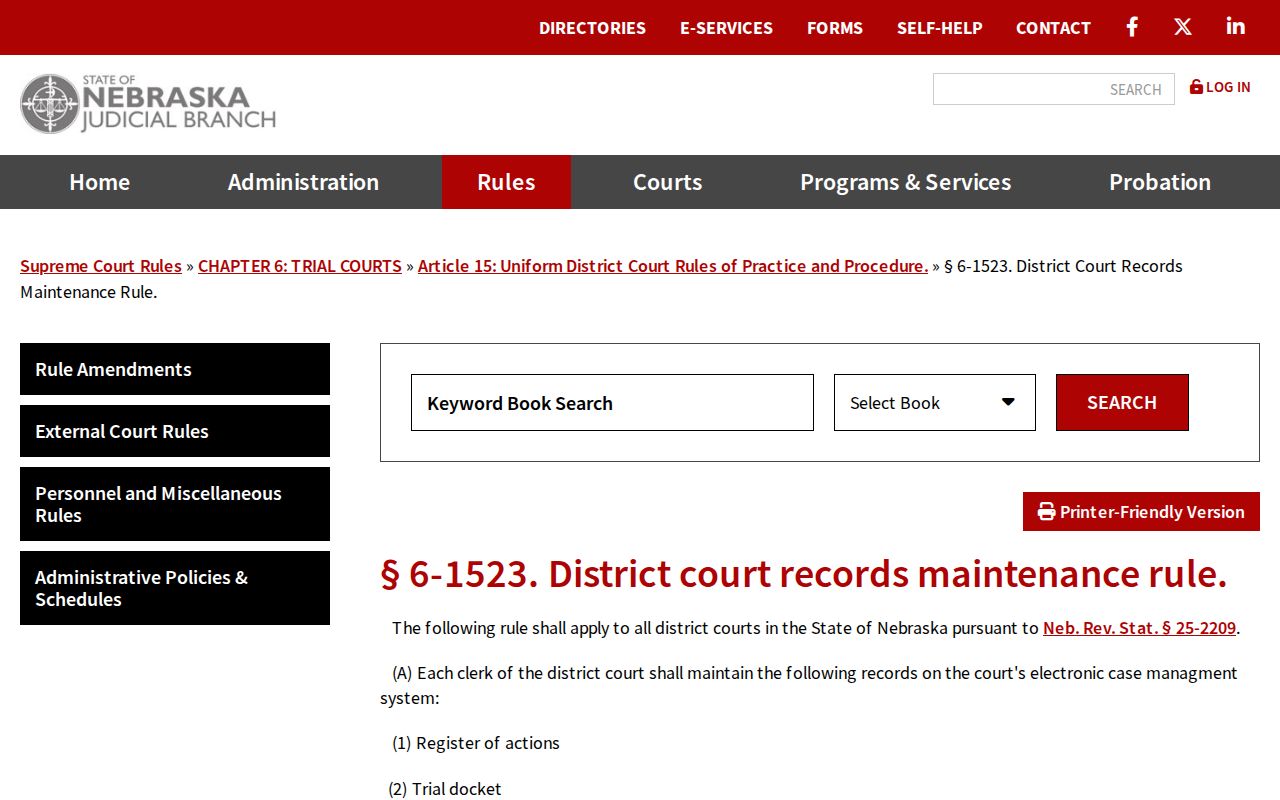
The rule also explains the danger of short entries. A brief public line is not the full text of a judgment or court order, so rely on the filed document when the exact wording counts.
Types of Civil Cases on the Docket
Furnas County Court takes civil matters up to its current statutory limit. It also runs a separate small-claims division. Furnas District Court handles the larger civil cases, domestic relations, appeals, and other general-jurisdiction matters. Probate, guardianship, and conservatorship cases also move through County Court. Their access rules and record needs can differ from an ordinary civil filing.
- County Court civil actions within the current jurisdictional limit
- Small claims in the County Court division
- Larger civil actions in District Court
- Domestic-relations matters in District Court
- Probate and guardianship-related County Court records
Furnas Civil $70,000 Limit
Here is where a stale figure can trip you up. The current statewide fee schedule puts the County Court civil jurisdictional limit at $70,000. The $52,000 figure on the Furnas County page is older. It should not drive a routing decision today. If an award tops the jurisdictional amount, the schedule says County Court taxes the difference between County and District Court filing fees as added costs. The limit fixes which court has jurisdiction. It says nothing about the value or outcome of any particular claim.
Current rule: Use the current statewide $70,000 County Court civil limit, not the outdated $52,000 local webpage figure.
When a limit or court cost may have shifted, the Judicial Branch fee schedule is the place to check. A caption or Register entry alone will not reveal why a given court took the case. Review the filed pleading or ask the court when that distinction matters.
Settings and Hearings on Civil Dockets
A Furnas civil setting can show up as a hearing. It may also be a scheduling event, a mediation-related filing, or another court date. The calendar gives a compact view; the Register adds the wider history. A continuance moves a setting. A cancellation or empty calendar result does not prove the case was dismissed. It does not prove it was settled or decided, either. Check the newest Register entry, and confirm any time-sensitive date with the responsible clerk. The Furnas County court calendar page walks through the calendar-specific search path. It also warns about incomplete or late entries.
Furnas Civil Small Claims
Small claims in Furnas County Court are civil cases capped at a current $7,500. The $3,500 amount on the County Court page is stale. State small-claims material says attorneys are not used in the division. Filing and service deadlines still apply. Read a small-claims Register with care. A filing, a setting, a judgment, and a satisfaction are separate events.
The Nebraska small-claims self-help page carries the current division information and forms.
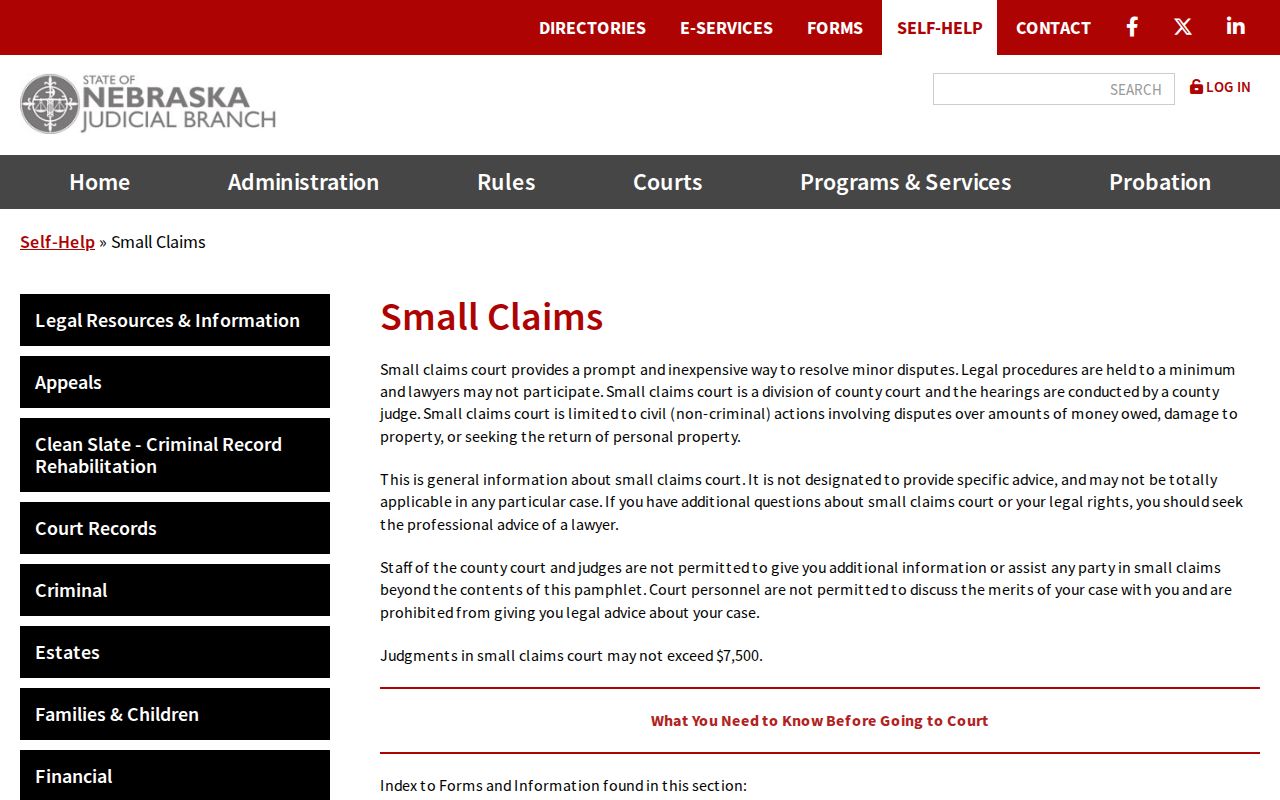
Small claims lives inside the wider Furnas civil records system, but it plays by its own rules. Both the dollar limit and the procedure differ from a regular civil docket.
Furnas Civil Filing Schedule
The current schedule puts a small-claims filing at $58 total, effective July 1, 2026. That figure covers filing only. Service, enforcement, and other case costs are extra. The total stacks up from ten separate charges. Those are a $4.25 small-claims docket fee, $2 docket and judges-retirement fee, $12 judges-retirement fee, $8 automation fee, $1 education fee, $0.75 dispute-resolution fee, $3 indigent-defense fee, $1 uniform-data fee, $16 state docket fee, and $10 case-management fee. Moving a case into regular civil costs $20. The appeal cost bond runs $50. Check with the court before paying, since schedules can change.
| Furnas civil small-claims item | Listed amount |
|---|---|
| Total small-claims filing schedule | $58 |
| Transfer to regular civil | $20 |
| Appeal cost bond | $50 |
Furnas Civil Judgment Terms
Three terms in a Furnas civil record carry distinct meanings. The Register lists case events. A judgment is the court's actual ruling or order, and a satisfaction is a later entry proving that judgment was paid off. That distinction matters for anyone doing a case lookup. A search that stops at the judgment itself can miss something. The satisfaction entry may sit later in the judgment index.
- General index
- An index using direct and inverse party names with a case number.
- Judgment index
- An index that tracks debtor, creditor, case number, and satisfaction.
- Judgment
- The court's recorded adjudicative result, distinct from a filing or motion.
- Satisfaction
- An entry that a judgment was satisfied, not the same thing as the original judgment.
Public Access to Civil Dockets
Nebraska's public access rules open up civil court information. Not every document in a case file can be pulled remotely, though. Public terminals are the starting point whenever an authorized electronic record exists. Remote JUSTICE access may be narrower. For copies from a specific court, ask that court's custodian first. The Nebraska Public Records Act cannot override a rule, statute, or court order that limits access. The electronic court-records rule sets out how inspection works at a clerk terminal. It also explains how paper copies are issued once the applicable charge is paid.
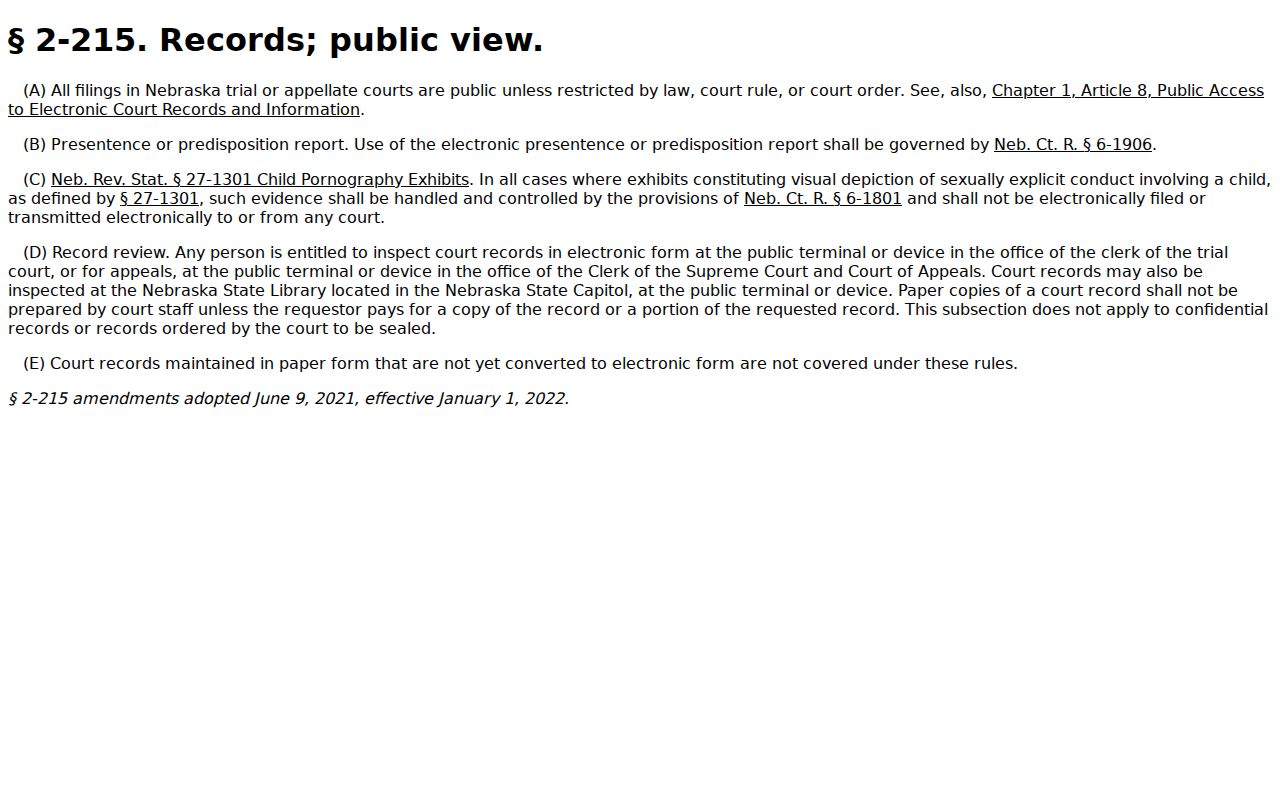
Confidential, sealed, medical, or otherwise restricted material stays out of view along this route.
Public access rules:
Neb. Rev. Stat. §84-712 provides the inspection and copying baseline for public records.
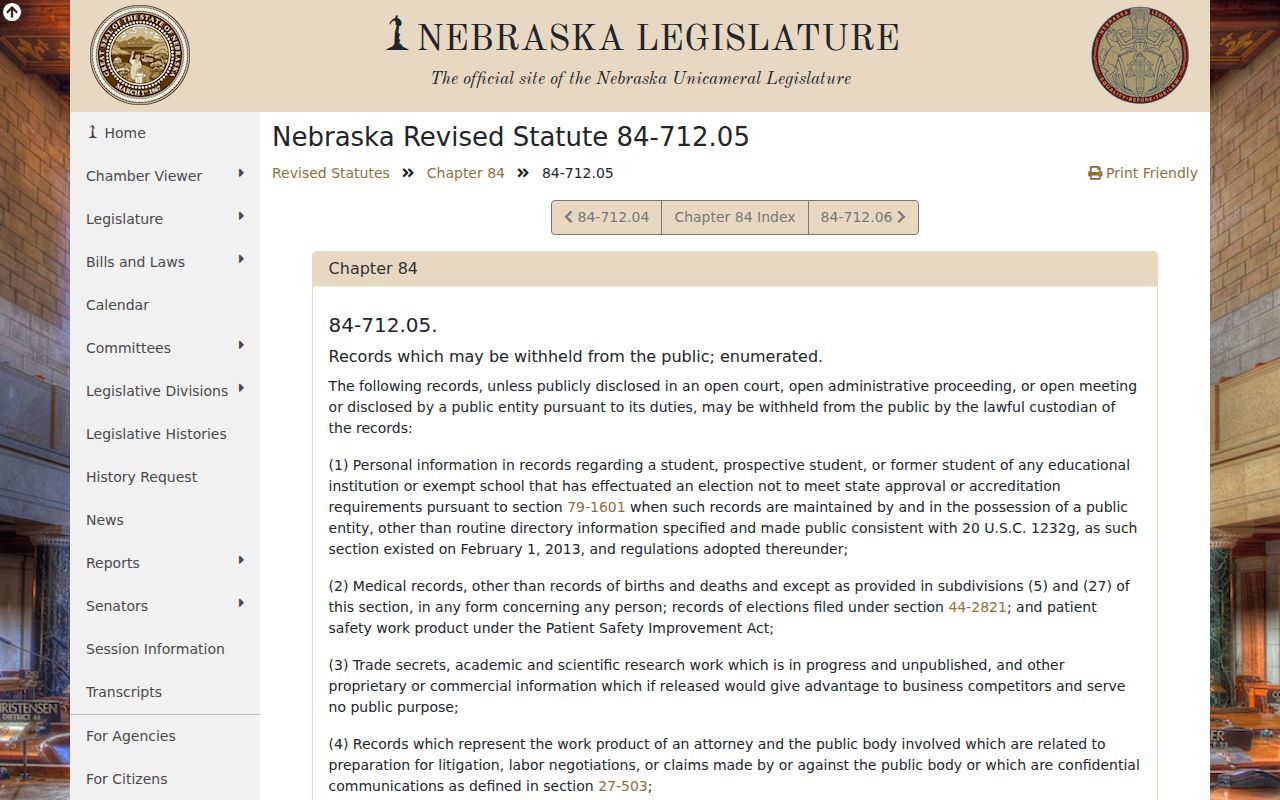
Neb. Rev. Stat. §84-712.05 lists statutory exemptions, including protected categories of information.
Nebraska Court Rules §§1-803–1-810 govern public access to court records, registers, calendars, and restricted information.
Furnas Civil Copy Requests
Ask County Court or the District Clerk for the exact case number and the document you need, whether that is a complaint, answer, judgment, decree, order, or Register of Actions. The CC 3:30 billing form is the court copy reference. Fees are simple: $0.25 per page for a plain photocopy, $1 to execute a certificate and affix a seal, and $3 for an authenticated three-seal certificate. Count your documents and certification needs first, then expect a total. Furnas lists no online civil-file request, email request, or dropbox process. County Court Clerk Jennifer Raburn sits at PO Box 373, Beaver City, NE 68926, (308) 268-4025. District Clerk Tiffany Burton is at PO Box 413, 912 R Street, Third Floor, Beaver City, (308) 268-4015. District staffing varies, and the district page asks visitors to call (308) 268-4145 before traveling. Per the Furnas FAQ, public-record requests go to the department in charge, and the County Clerk will forward a request when you are unsure where it belongs.
Furnas Civil Record Exemptions
Public records still have documented exceptions. A court may withhold or redact certain material. That includes medical information and financial-account information. It also covers victim-identifying information, investigative material, and other protected categories. Finding a case in a public index does not guarantee the underlying document gets released. State rules and court orders can impose limits that a general request cannot overcome. Neb. Rev. Stat. §84-712 sets the baseline for public inspection and copying.
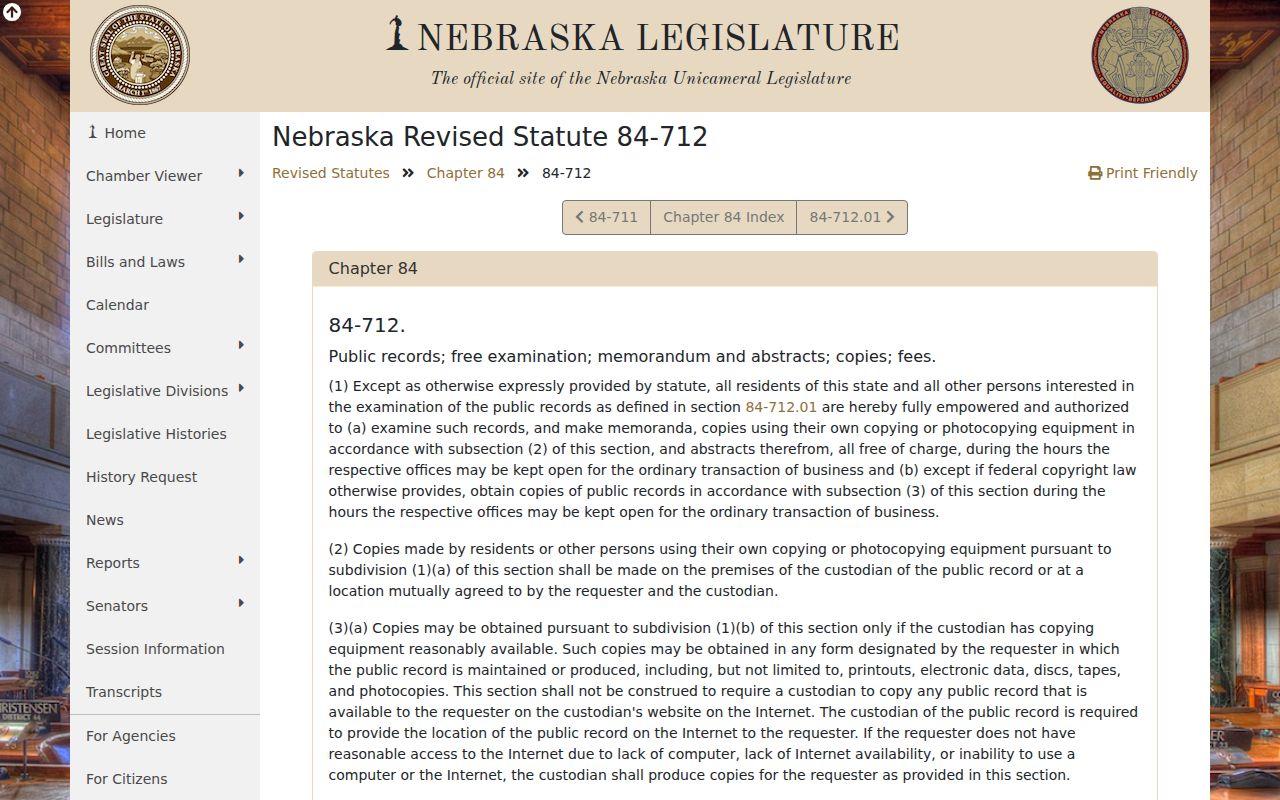
Describe the record precisely and include the case number, so the right custodian can identify it without guessing. Neb. Rev. Stat. §84-712.05 holds the official exemptions list.
When access is restricted, ask the clerk which rule or exemption applies. Also ask whether a public Register entry or a redacted copy is available.